The defining characteristic of mirrorless interchangeable-lens cameras (MILC) is the complete removal of the optical reflex mirror. Instead, light passes directly through the lens onto the digital sensor, which feeds a live video feed to an electronic viewfinder (EVF).
By eliminating the mechanical mirror box, engineers could place the lens mount mere millimeters away from the sensor. This structural shift inadvertently created the greatest platform for vintage lens adaptation in photographic history.
Space for Spacers
With flange distances plummeting to 16mm-20mm, the mathematical equation for adaptation shifted entirely. A vintage M42 lens (45.46mm flange) mounted to a Sony E body (18mm flange) leaves a massive 27.46mm gap.
This gap is easily filled by a simple, hollow tube of machined metal—a spacer. No corrective optics are required. The vintage lens performs exactly as it did on its original film body, projecting its light unhindered onto a modern, high-resolution digital sensor.
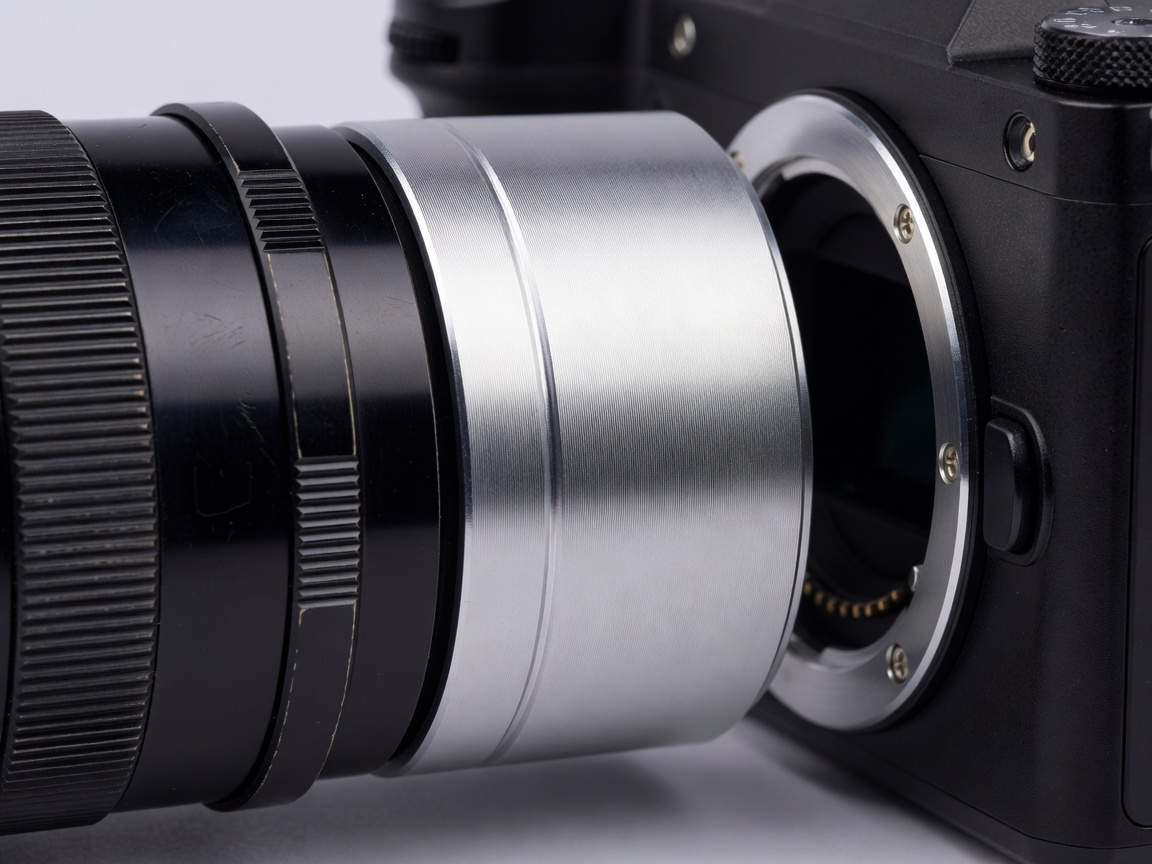
Sony E (18.00mm)
The early pioneer of full-frame mirrorless. Because Sony opened their mount specifications early, third-party manufacturers flooded the market with adapters for every conceivable vintage lens mount, solidifying Sony as the favorite for adaptation.
Micro Four Thirds (19.25mm)
A smaller sensor format with a short flange. Excellent for adapting old 16mm cine lenses (like C-mount) that would normally suffer from heavy vignetting on larger full-frame sensors.
Nikon Z (16.00mm)
Nikon executed a dramatic pivot. Moving from the longest DSLR flange (F-mount) to the shortest mirrorless flange on the market, the Z mount has the physical capability to accept virtually any lens ever made, including those from other mirrorless systems.